7 Things That Made JTeles the Top Farmer in Rust During One Wipe
Need articles like this for your video? They help promote it on YouTube and Google — order them in the Telegram bot @sat_sit_bot. Articles with your video embedded are written and posted by the bot itself — on popular topical sites (no ads). Your first 50 articles are free.
· based on the channel JTeles
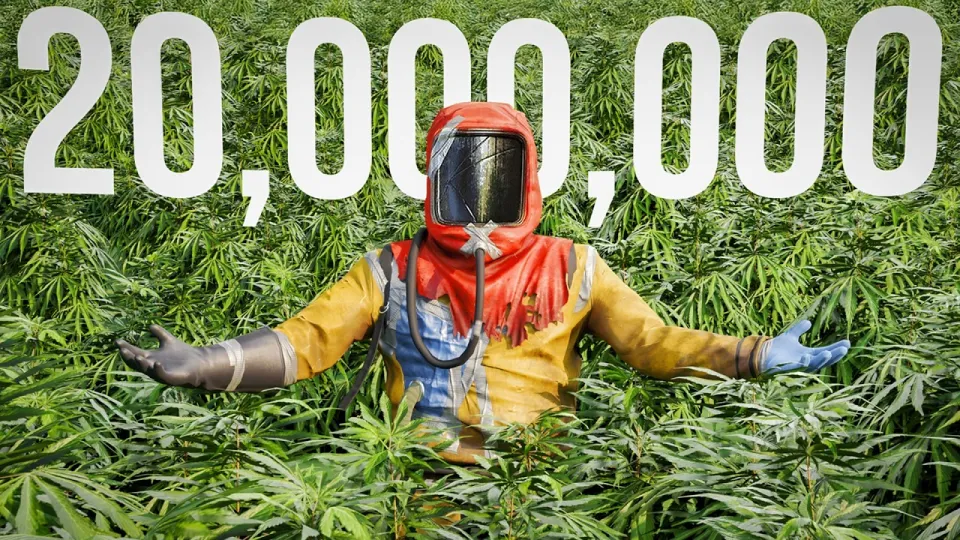
Rust farming is usually a means to an end — a few planters behind the base, enough cloth for bandages and low-grade fuel. JTeles turned it into the whole wipe: starting with 126,000 cloth and chasing 20,000,000 cloth in 7 days to become the game's number one farmer. The run required a viewer-built clan, the biggest cloth farm the server had seen, and a running fight with a large clan that wanted the project dead. Anyone who wants to follow the same route can start by grabbing the War Thunder bonus at wtplay.link/jteles, the same link promoted in the video.
What the 20,000,000 cloth challenge in Rust actually involved
The goal was simple on paper: turn 126,000 starting cloth into 20,000,000 before the wipe ended, a roughly 158x increase in 7 days. Cloth comes from hemp plants, and hemp comes from planters, so the real objective was industrial scale — hundreds of planters fed with water and fertilizer, harvested on a loop, and turned into cloth faster than the server could comfortably process. On a busy server that means a base big enough to house the farm, a team big enough to run it around the clock, and enough defense to keep raiders away from a structure that is, by design, a giant loot pinata. JTeles framed it as a farmer leaderboard run rather than a PvP one, but the two quickly became the same thing.
How the biggest cloth farm in Rust was built
The farm was a community project: viewers were invited onto the server to help plant, water, harvest and defend. The build followed the standard industrial logic of a large-scale hemp operation:
- Secure a compound with walls, gates and turrets before the first planter goes down.
- Lay out planter banks in rows with sprinklers and water barrels feeding them.
- Stockpile fertilizer and seeds so the loop never stops.
- Split labor between farmers, haulers and defenders so the harvest keeps moving while the base is under threat.
- Expand in stages, adding planter rows as the cloth total climbs.
By the end the compound was so large and so densely packed with entities that simply looking at it dropped the server's performance — a detail viewers noticed immediately. Cable management across the base became a running joke, and the farm's footprint turned into a landmark that any raider on the server could find.
Why a Russian clan tried to stop the run
A large Russian clan found out what was being attempted and made it their mission to end it. That turned the wipe into a mix of farming, PvP, raids, base defense and alliances, with the farm itself as the prize. The clan's pressure shaped the schedule: harvests had to be covered by guards, supply runs needed escorts, and the team had to negotiate with other groups to keep the compound standing. The most praised part of the run was the defense mounted while JTeles was offline — clanmates holding the base through attacks, repairs and raids without him online. For a farm of that size, trust and coverage matter as much as planter count.
Typical questions from viewers about the cloth run
Most of the discussion around the video centers on the practical side of the challenge rather than the highlight reel. Viewers wanted to know how long a farm of that scale takes to plant and harvest, whether the lag was a real problem or just a visual joke, and how the team kept the operation running while the owner slept. The answer to all three is the same: scale multiplies time. One player who once ran a 1,008-planter farm on a 5x server reported roughly 3 hours to plant and 3 hours to harvest by hand before the plant-all and harvest-all quality-of-life updates, for a yield of about 17.4 million cloth. A farm built for 20 million is that workload, repeated and defended.
The real cost of a 7-day farming marathon
Hitting a cloth target that large is a scheduling problem more than a skill problem. The run compressed an entire wipe's worth of farming into a week, which meant long sessions, short sleep and a lot of time staring at planters. JTeles joked on stream about going outside for the first time since wipe and finding it painfully bright — a line that says more about the grind than any stat. Behind him sat a team that covered the base while he was away, repaired after raids and kept the harvest moving. That division of labor is the actual lesson of the video: a solo farmer can grow a big field, but only a coordinated group can defend one for a full wipe.
All the links from the video
- War Thunder free bonus, PC and consoles: https://wtplay.link/jteles
- War Thunder free bonus, mobile: https://wtm.game/jteles
- JTeles Discord: https://discord.gg/jteles
- Twitter/X: https://twitter.com/xJTeles
- TikTok: https://www.tiktok.com/@xjteles
Final thoughts on JTeles and the number one farmer run
The cloth challenge works because it takes a role most Rust players treat as background chores and pushes it to a competitive extreme: 126,000 cloth in, 20,000,000 out, in 7 days, against a clan actively trying to stop it. The farm's size, the server lag it caused and the defense mounted while the owner was offline all came from the same decision — to invite the community in and build something bigger than one player could manage. JTeles documents that run from the first planter to the final total, and the channel is worth following for anyone who wants to see how far a dedicated farming operation can go. If you want to support the creator the same way the video asks, claim the free War Thunder bonus through wtplay.link/jteles.
Key takeaways
- JTeles started the wipe with 126,000 cloth and set a target of 20,000,000 cloth within 7 days.
- Viewers were invited onto the server to help build and defend the farm.
- A large Russian clan learned of the project and tried to stop it with PvP, raids and base defense fights.
- The finished compound was so large that looking at it lagged the server.
- Clanmates held the base while JTeles was offline, farming or sleeping.
Questions & answers
How much cloth did JTeles need to become Rust's number one farmer?
The run started at 126,000 cloth and targeted 20,000,000 cloth within a single wipe, roughly 7 days. That is about a 158x increase over the starting stock, which required an industrial planter farm rather than manual hemp picking.
How long does it take to plant and harvest a farm that big?
It depends on scale and on quality-of-life features like plant-all and harvest-all. One player reported that a 1,008-planter farm on a 5x server took about 3 hours to plant and 3 hours to harvest by hand before those updates, yielding around 17.4 million cloth. A 20 million target is that workload or more, plus defense.
Did the clan actually manage to stop the farm?
No. A large Russian clan found out about the project and attacked it with raids and PvP, but clanmates defended the compound, including while JTeles was offline, and the run continued. The farm grew large enough to lag the server when players looked at it.
Can a solo player repeat this cloth challenge?
Realistically no. The run relied on invited viewers who planted, harvested, hauled and defended around the clock. A solo player can build a large planter setup, but keeping it alive against a hostile clan for a full wipe needs a team and alliances.
Source: I Became Rust's #1 Farmer... · Markdown version